How to Build a Vertical Garden: A Step-by-Step Guide for Homeowners
Highlights:
-
Maximize Limited Space Efficiently: Vertical gardening allows you to grow a diverse range of flowers, herbs, and vegetables upwards, making it perfect for small balconies, patios, or blank exterior walls.
-
Assess Environmental Conditions First: Before building, evaluate structural strength, sun exposure, and proximity to a water source to ensure your plants have the right environment to survive.
-
Choose the Right System for Your Budget: There are multiple structural styles available, ranging from affordable fabric pocket planters and repurposed wooden pallets to classic trellises and freestanding modular towers.
-
Use High-Quality, Lightweight Soil: Avoid heavy ground soil, which compacts and drains poorly; instead, opt for a premium potting mix blended with perlite or peat moss to keep the structure light and roots healthy.
-
Arrange Plants by Moisture Needs: Understand that gravity pulls water downward, meaning you should place drought-tolerant plants at the top and moisture-loving varieties at the bottom.
-
Commit to Consistent Watering and Feeding: Vertical planters dry out quickly and lose nutrients fast, requiring frequent watering—often via an automated drip system—and regular liquid fertilization.
Living in a home with limited yard space does not mean you have to give up your dream of a lush, vibrant garden. Whether you have a cozy balcony, a small concrete patio, or just an empty exterior wall that needs some life, vertical gardening offers a brilliant solution. By shifting your perspective from the ground up, you can grow flowers, herbs, and even vegetables in a fraction of the traditional footprint.
Vertical gardens do more than just save space. They improve air quality, provide natural insulation to your home, and completely transform stark architectural features into living art. If you are ready to turn your blank walls into a thriving ecosystem, this comprehensive guide will take you through every single step of the process, from selecting the right structure to keeping your plants healthy year-round.
Understanding the Benefits of Vertical Gardening
Before diving into the construction process, it is helpful to understand why vertical gardens have become a staple for modern homeowners. Shifting your planting strategy vertically offers distinct advantages over traditional container or in-ground gardening.
-
Maximizing Limited Layouts: The most obvious perk is space efficiency. You can cultivate dozens of plants in a square-foot footprint that would normally only accommodate one or two traditional pots.
-
Better Pest and Disease Control: Because your plants are lifted off the ground, they are far less susceptible to soil-borne diseases, fungal infections caused by poor air circulation, and ground-dwelling pests like slugs and snails.
-
Ergonomic Accessibility: No more bending over, kneeling on hard ground, or straining your back to weed and harvest. A vertical garden brings your plants right to eye and waist level, making maintenance a breeze.
-
Improved Home Efficiency: A densely planted vertical wall can act as a natural barrier against the elements. In the summer, it shades exterior walls to keep your home cooler, while in the winter, it can provide an extra layer of insulation against cold winds.
Assessing Your Space and Choosing the Right Location
Success with a vertical garden depends heavily on putting it in the right spot. Just like a traditional garden, you need to match your location’s environmental conditions with the needs of the plants you want to grow.
Evaluating Sunlight Exposure
Spend a few days observing the wall or fence you intend to use. Does it get blasted by intense afternoon sun, or does it stay in the shade for most of the day? Most vegetables and flowering plants require at least six hours of direct sunlight daily. If your chosen wall is primarily shaded, you will need to focus on shade-tolerant varieties like ferns, hostas, and certain leafy greens.
Checking Structural Integrity
A vertical garden gets incredibly heavy once the structure is mounted, the soil is packed, and the plants are fully watered. Watered soil weighs significantly more than dry soil. Ensure that the wall, fence, or freestanding frame you choose can handle the load. Avoid anchoring heavy systems directly into flimsy drywall or rotting wood fences without proper reinforcement.
Proximity to a Water Source
Consider how you plan to water your garden. If your vertical wall is three stories up on a balcony or tucked far away from an outdoor spigot, dragging a heavy watering can back and forth will quickly become a tedious chore. Choosing a spot near a hose bib or incorporating an automatic drip system will save you immense time and effort down the road.
Selecting Your Vertical Gardening System
There is no one-size-fits-all approach to vertical gardening structures. The system you choose should align with your budget, your DIY skill level, and the specific aesthetics of your home.
Pocket Systems and Felt Pouches
Felt pocket planters are an incredibly popular and affordable entry point for homeowners. Made from breathable, heavy-duty recycled fabrics, these pockets can be screwed directly into a wall or hung from a frame. The fabric allows excess water to drain freely and prevents roots from becoming root-bound by naturally air-pruning them.
Wooden Trellises and Grid Panels
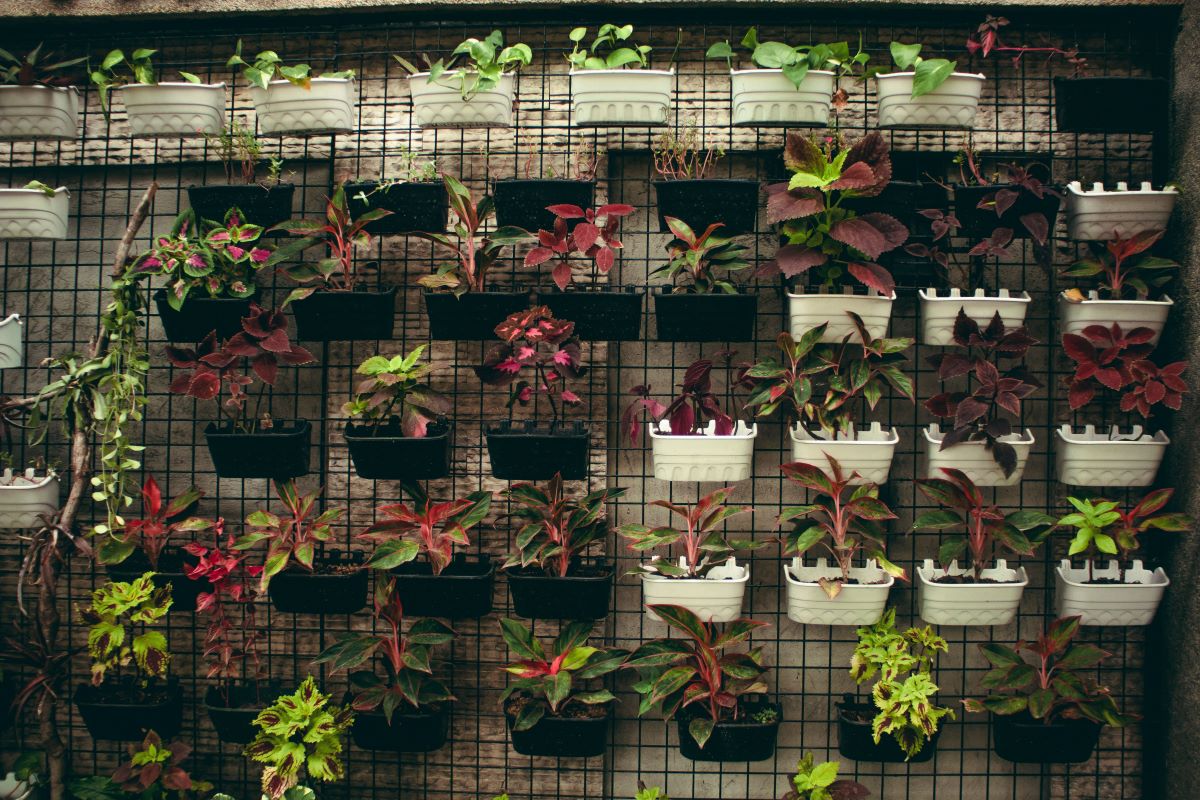
If you prefer a classic, rustic look, a wooden trellis or metal grid panel paired with hanging pots is an excellent option. You can attach standard terracotta or plastic pots to the grid using specialized hooks or brackets. This system is highly flexible because you can easily move individual pots around if a specific plant is getting too much or too little sun.
Pallet Gardens
Repurposing a wooden pallet is a fantastic, budget-friendly weekend project. By stapling landscape fabric to the back, bottom, and sides of a pallet, you create a solid backing that holds soil in place. Plants are then tucked into the slats between the wooden boards. Just ensure the pallet is certified safe for use, look for an “HT” stamp, which means it was heat-treated rather than chemically treated.
Modular Freestanding Towers
For those who prefer not to drill into their exterior walls, freestanding vertical towers or tiered planter boxes are ideal. These systems stack vertically and often feature built-in watering reservoirs. They are stable, highly mobile, and perfect for renters who need to take their garden with them when they move.
Gathering Your Tools and Materials
Having everything ready before you start assembly will make the building process smooth and enjoyable. Here is a comprehensive checklist of what you will need to build a standard wall-mounted vertical garden:
-
The structural frame: Your chosen trellis, pallet, or fabric pocket system.
-
Mounting hardware: Stainless steel screws, wall anchors, or heavy-duty zip ties depending on your backing surface.
-
Power drill and bits: Essential for securing the structure safely.
-
Level and measuring tape: To ensure your garden looks professional and straight.
-
High-quality potting mix: A lightweight blend specifically designed for containers.
-
Landscape fabric: Useful for lining wooden structures to keep soil contained.
-
Staple gun: For securing landscape fabric to wooden frames.
-
Your selected plants: Plugs or small starter plants work best rather than growing from seed.
-
A watering system: A hose, watering can, or a dedicated drip irrigation kit.
Step-by-Step Construction and Installation Guide
Now that you have selected your location, picked your system, and gathered your materials, it is time to build. Follow these steps to ensure a secure and functional installation.
Step 1: Preparing the Supporting Wall
If you are attaching your vertical garden directly to a wooden fence or a home exterior, it is wise to install a waterproof barrier first. A sheet of thick plastic sheeting or a backing board made of marine-grade plywood will prevent moisture from seeping into your home’s siding or rotting your fence over time. Secure this backing barrier to your wall before mounting the actual garden frame.
Step 2: Mounting the Main Structure
Using your tape measure and level, mark the spots where your brackets or anchor screws will go. Drill pilot holes into your wall or fence. If you are mounting onto brick or concrete, use masonry anchors to ensure the weight is supported. Screw the frame or pocket system securely into place. Give it a firm tug to make sure there is no wobble or slippage.
Step 3: Lining and Prepping for Soil
If you are using a wooden pallet or a custom-built crate system, you need to create a secure backing for the soil. Lay the structure flat and use a staple gun to attach heavy-duty landscape fabric across the back and bottom faces. Double-layer the fabric to prevent tears. If you are using a pre-made pocket system, you can skip this step, as the pockets are already designed to hold soil directly.
Step 4: Preparing the Growing Medium
Do not use regular garden soil from the ground for your vertical garden. Ground soil is too dense, compacts easily when watered, and drains poorly in enclosed spaces, which can lead to root rot. Instead, use a premium, lightweight potting mix blended with perlite, peat moss, or coconut coir. This ensures the mix retains just enough moisture while allowing the excess to drain out easily, keeping the total weight manageable for your wall structure.
Choosing the Best Plants for Your Vertical Wall
Not all plants thrive when grown vertically. When choosing your greenery, think about the growth habits, root depth, and moisture requirements of each variety.
Herbs and Leafy Greens
These are arguably the most successful candidates for vertical setups. They have shallow root systems and do not require massive amounts of soil to thrive.
-
Loose-leaf lettuce and spinach: Grow incredibly fast and are easy to harvest.
-
Basil, mint, and cilantro: Perfect for a kitchen-accessible wall, though mint should be given its own pocket so it doesn’t crowd out other herbs.
-
Thyme, oregano, and rosemary: These prefer slightly drier conditions and do well near the top of the wall where drainage is fastest.
Flowering and Ornamental Plants
If your goal is pure visual impact, choosing cascading or compact flowering varieties will create a stunning living tapestry.
-
Pothos and English ivy: Excellent options for trailing vines that quickly cover structural elements.
-
Petunias and fuchsias: Produce vibrant, cascading blossoms that spill beautifully over the edges of pockets or pots.
-
Succulents: Ideal for sunny, dry walls. Varieties like echeveria and sedum require minimal water and look like living geometric art.
Small Vegetables and Fruits
You don’t have to limit yourself to ornamentals; you can harvest plenty of food by optimizing your outdoor space with smart plant choices.
-
Strawberries: Their cascading growth habit makes them a perfect fit for vertical pockets, keeping the fruit clean and off the wet ground.
-
Cherry tomatoes: Compact bush varieties can thrive in larger vertical containers, provided they have a bit of cage or netting support.
-
Radishes and bush beans: Fast growers that adapt easily to confined root zones.
Planting and Arranging for Longevity
When it comes to putting your plants into the structure, the layout requires a bit of strategy. Gravity dictates that water will always seep downward, meaning the bottom rows of your vertical garden will stay wetter for longer, while the top rows will dry out rapidly.
| Garden Level | Moisture Status | Best Plant Types | Examples |
| Top Rows | Dries out quickly, catches maximum sun | Drought-tolerant herbs and sun-lovers | Rosemary, Thyme, Succulents |
| Middle Rows | Moderately moist, balanced drainage | Flexible greens and bright flowers | Basil, Lettuce, Strawberries, Petunias |
| Bottom Rows | Stays damp longest, catches run-off | Moisture-loving and shade-tolerant varieties | Ferns, Hostas, Mint, Spinach |
Gently remove your starter plants from their nursery pots. Massage the root balls lightly to loosen them up if they are root-bound. Pack your potting mix into the pockets or planters, insert the plant, and press down firmly around the base to eliminate any air pockets. Be sure not to bury the stem deeper than it was growing in its original container.
Maintaining Your Vertical Garden
Once your vertical garden is built and planted, it requires regular upkeep to stay healthy and beautiful. Because vertical systems hold less soil than traditional garden beds, they need a bit more attentiveness from the homeowner.
Mastering the Watering Routine
Vertical gardens dry out much faster than ground-level gardens because they are exposed to air currents on multiple sides. During the peak of summer, you may need to water your vertical wall every single day. If you notice the soil pulling away from the edges of the pots or pockets, it is too dry. Consider installing a simple automated drip irrigation system hooked up to a digital timer; this ensures your plants get a consistent supply of water without you needing to stand there with a hose daily.
Fertilizing and Nutrient Replenishment
Because you will be watering your vertical garden frequently, nutrients will leach out of the lightweight soil mix faster than they would in the ground. To counteract this, feed your plants with a diluted, water-soluble organic fertilizer every two to three weeks during the active growing season. Alternatively, you can mix a slow-release granular fertilizer into the potting soil during the initial planting phase.
Pruning and Grooming
Regular maintenance keeps your living wall looking neat and prevents faster-growing species from suffocating slower ones. Pinched back herbs will grow bushier rather than leggy. Snip off dead or yellowing leaves to encourage air circulation and reduce the risk of pests setting up camp in the dense foliage. If a particular plant dies or outgrows its space, don’t be afraid to pull it out and swap in a fresh plug.
Final Thoughts
Building a vertical garden is an incredibly rewarding project that turns underutilized walls into vibrant, living spaces. By choosing a system that matches your lifestyle, paying close attention to water and light requirements, and organizing your plants strategically, you can enjoy a lush oasis right outside your door. Whether you are harvesting fresh basil for dinner or simply enjoying a wall of cascading flowers, your new vertical garden proves that you don’t need a massive yard to achieve an impressive green thumb.